
Why Commercial Auto Liability Trucking Coverage Can Make or Break Your Business
Commercial auto liability trucking is the foundational insurance coverage every truck on the road needs — and in most cases, the law requires it before you can legally operate.
Here’s a quick breakdown of what it is and who needs it:
| What It Is | Coverage that pays for bodily injury and property damage your truck causes to others in an accident |
|---|---|
| Who Needs It | Owner-operators, motor carriers, private carriers, for-hire truckers, new authorities |
| Federal Minimum | $750,000 for most interstate carriers hauling general freight |
| Hazardous Cargo | Up to $5,000,000 required by FMCSA |
| Industry Standard | Many freight brokers and shippers require $1,000,000 or more |
| What It Covers | Third-party bodily injury, property damage, legal defense costs, pollution cleanup |
| What It Doesn’t Cover | Your own truck, your cargo, or injuries to your own employees |
Running a trucking business means managing serious financial risk every mile. One accident involving a heavy commercial vehicle can trigger lawsuits, medical claims, and repair costs that reach into the hundreds of thousands — or more. Without the right liability coverage in place, a single incident can wipe out everything you’ve built.
This guide walks you through your real options for commercial auto liability trucking coverage — what to look for, what the law requires, and how to get the best value without sacrificing protection.
I’m Anna Domagala, co-founder of Pro Guard Insurance Agency, Inc., an independent agency specializing in commercial auto liability trucking and a full range of commercial truck insurance solutions across 31 states. With over 100 carrier partners and a team built around the unique needs of the trucking industry, we help small trucking businesses find coverage that actually fits how they operate.
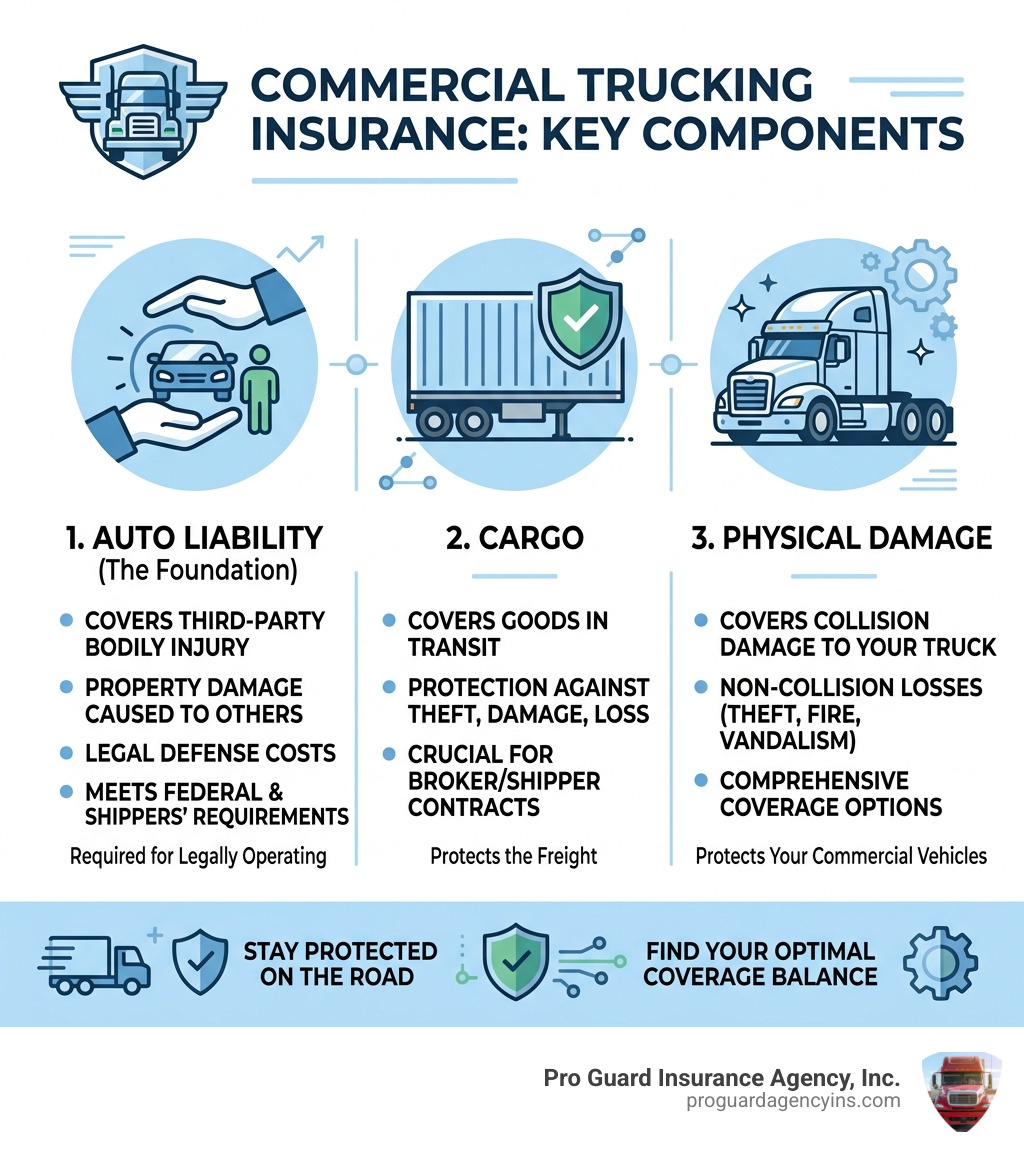
Understanding Commercial Auto Liability Trucking and What It Covers
At its heart, commercial auto liability trucking is about protecting the “other guy.” If your driver is at fault in an accident, this insurance steps in to cover the costs associated with the damage caused to third parties. Think of it as your financial shield against the unpredictable nature of the road.
When we talk about “liability,” we are looking at three main buckets of coverage:
- Bodily Injury: This covers medical expenses, hospital bills, rehabilitation, and even funeral expenses for people injured or killed in an accident involving your truck. It also covers lost earnings for the injured party.
- Property Damage: If your rig takes out a sedan, a guardrail, or a storefront, this part of the policy pays for the repairs or replacement of that property.
- Pollution Cleanup: Many people don’t realize that a major accident often results in fuel or chemical spills. Liability policies typically include coverage for the cost of cleaning up these hazardous materials from the roadway or surrounding environment.
Beyond just paying the bills for the damage, commercial auto liability trucking provides an essential service: legal defense. If your business is sued following an accident, your insurer will typically provide attorney fees, cover court costs, and handle settlement negotiations. Given that legal fees alone can bankrupt a small fleet, this is often the most valuable part of the policy. You can learn more about how this fits into our comprehensive services to ensure your business is fully protected.
The Role of Commercial Auto Liability Trucking for Owner-Operators
Whether you are a seasoned owner-operator with years of experience or a “new authority” just getting your DOT number, liability insurance is your ticket to the game.
- Owner-Operators: If you operate under your own authority, you are legally responsible for maintaining primary liability.
- New Authorities: For those just starting out, insurance is often the biggest hurdle. While premiums might be higher due to a lack of operating history, having a solid liability policy is what allows you to secure your first contracts.
- Private Carriers: Even if you only haul your own products (like a farmer moving grain or a manufacturer delivering furniture), you still face the same road risks as for-hire truckers.
While liability covers the damage you do to others, don’t forget that your business also needs to protect the goods in the back. Check out A Broker’s Guide To Not Losing Sleep Over Cargo Insurance to see how these two coverages work hand-in-hand.
Specific Damages and Legal Expenses
When an accident occurs, the costs multiply quickly. It isn’t just about a dented bumper. We are talking about:
- Medical Payments: Immediate emergency room visits and long-term care for third parties.
- Lost Earnings: If the other driver can’t work because of the accident, your liability policy helps cover their lost wages.
- Structural Damage: Heavy trucks can cause significant damage to infrastructure, which is far more expensive than simple car repairs.
Federal and State Requirements: Navigating Limits and Filings
The Federal Motor Carrier Safety Administration (FMCSA) doesn’t play around when it comes to insurance. They set strict minimums based on the type of freight you haul and the weight of your vehicle.
For official federal guidance, carriers can review the FMCSA’s insurance filing and financial responsibility resources here: FMCSA Insurance Requirements.
| Cargo Type | FMCSA Minimum Liability Limit |
|---|---|
| Non-hazardous freight (under 10,000 lbs) | $300,000 |
| Non-hazardous freight (over 10,000 lbs) | $750,000 |
| Oil and certain hazardous materials | $1,000,000 |
| Other hazardous substances (large quantities) | $5,000,000 |
While $750,000 is the federal floor for general freight, the “industry standard” is actually much higher. Most freight brokers and shippers will not even talk to you unless you have at least $1,000,000 in primary liability.
To prove you have this coverage, your insurance company must submit “filings” to the FMCSA. The most common are the BMC-91X (for interstate carriers) and the MCS-90 endorsement, which guarantees that the public will be protected even if a specific incident isn’t explicitly covered by the policy wording. We handle these filings across several states to ensure you meet local requirements.
States also have their own specific mandates. For example, if you operate in the South or West, you must ensure you meet the specific mandates of states like Alabama, Florida, or Arizona to ensure you stay compliant with local laws.
Distinguishing Commercial Auto Liability Trucking from Cargo Insurance
A common mistake new drivers make is assuming “liability” covers everything. It doesn’t.
- Primary Liability: Protects the public (third-party risk).
- Motor Truck Cargo: Protects the freight you are hauling (first-party risk).
If you drop a trailer and damage the customer’s goods, your liability policy won’t pay a dime for the cargo-that is what cargo insurance is for. For those operating smaller units, we have a guide on How To Insure Your Box Truck Without Breaking The Bank that explains how to balance these costs.
Beyond the Basics: Exclusions and Complementary Coverages
No insurance policy covers everything. Standard commercial auto liability trucking usually excludes:
- Damage to your own truck: You need Physical Damage coverage for that.
- Injuries to your drivers: That falls under Workers’ Compensation or Occupational Accident insurance.
- Intentional acts: If a driver intentionally rams a vehicle, insurance won’t cover the fallout.
To fill these gaps, we often bundle liability with other essential coverages:
- Non-Trucking Liability (NTL): Covers you when you’re using the truck for personal reasons (like going to the grocery store) while not under dispatch.
- Bobtail Insurance: Specifically for when you are driving the tractor without a trailer. Confused about the difference? Read Bobtail Insurance Explained: Protecting Your Rig Without The Trailer.
- Trailer Interchange: Covers damage to a trailer you don’t own while it’s in your possession under an interchange agreement.
- Physical Damage: Protects your investment from fire, theft, and collisions.
Even if you aren’t hauling heavy freight—say you’re in the food service niche—specialized liability is still key. Check out our tips on how to Wok And Roll Safely With The Best Food Truck Insurance.
Why Commercial Auto Liability Trucking is Essential for Business Growth
You might see insurance as a “necessary evil” or a monthly bill, but it’s actually a growth tool. Top-tier brokers won’t look at you without a $1,000,000 limit. By maintaining high-quality commercial auto liability trucking coverage, you:
- Build Shipper Trust: They know their reputation is safe if an accident occurs.
- Access Better Loads: Higher-paying freight often requires higher insurance limits.
- Ensure Compliance: Avoid the fines and “Out of Service” orders that come with insurance lapses.
Factors Influencing Premiums and How to Optimize Your Policy
Why does one trucker pay $800 a month while another pays $1,500? Several factors influence your commercial auto liability trucking premiums:
- Driving Record: This is the #1 factor. Accidents, speeding tickets, and DUIs drive costs up instantly.
- Operating Radius: Long-haul trucking is riskier than local delivery, so it costs more to insure.
- Cargo Type: Hauling hazardous materials or heavy machinery is more expensive than hauling dry van general freight.
- Vehicle Age: Newer trucks often have better safety features, which can lead to discounts.
How to Lower Your Premiums:
- Use Telematics: Sharing your Electronic Logging Device (ELD) data with insurers can lead to significant discounts. Some telematics programs can save new customers an average of over $1,200.
- Safety Protocols: Implementing a formal safety training program for your drivers shows insurers you are low-risk.
- Bundle Policies: Combining liability, cargo, and physical damage with one agency often triggers multi-policy discounts.
- Pay in Full: Many carriers offer a discount if you pay the annual premium upfront rather than monthly.
Frequently Asked Questions about Trucking Liability
How long do insurance filings typically take?
In the trucking world, time is money. Most of our partners offer a 24-48 hour turnaround for federal FMCSA filings and state compliance. If you are operating in specific regions, we can help you navigate the requirements for states like Illinois or Georgia to see how local filings are handled.
Does this policy cover my truck for personal use?
Generally, no. Primary liability is for business use. If you use your rig to run personal errands, you need Non-Trucking Liability. This is especially important for owner-operators under a permanent lease. For more on personal vs. business vehicle use, see our page on Car And Motor Insurance Agency Inverness.
What is the difference between primary and general liability?
This is a big one!
- Primary Auto Liability: Covers accidents that happen on the road while the truck is in motion.
- General Liability: Covers “off-road” incidents. For example, if a customer slips and falls at your loading dock, or if your driver accidentally damages a customer’s facility while walking inside to sign paperwork. Both are necessary for a complete safety net. You can talk to an Insurance Broker Inverness to get a customized quote for both.
Conclusion
Navigating commercial auto liability trucking doesn’t have to be a solo haul. At Pro Guard Insurance Agency, Inc., we specialize in helping trucking businesses find the right balance between cost and comprehensive protection. Whether you are hauling across Arkansas routes or navigating trucking auto liability insurance in Colorado, we have the expertise to keep you compliant.
With access to over 100 carrier partners and licensing in 31 states, we provide the personalized service that big call centers simply can’t match. Don’t leave your business’s future to chance on the open road.
Ready to protect your rig and your reputation? Request a Quote for Your Trucking Business today and let us help you stay in your lane with the best coverage available.