
Why Getting Commercial Auto Truck Insurance Right Can Make or Break Your Business
Commercial auto truck insurance is a specialized type of business coverage that protects trucking operations from the financial fallout of accidents, cargo loss, liability claims, and regulatory penalties.
Here’s a quick breakdown of the main coverage types and who needs them:
| Coverage Type | What It Covers | Who Needs It |
|---|---|---|
| Primary Liability | Bodily injury & property damage to others on the road | All commercial truckers (federally required) |
| Motor Truck Cargo | Damage or loss of freight in transit | For-hire carriers, owner-operators |
| Physical Damage | Collision, theft, fire, or vandalism to your truck | Any trucker with a financed or high-value rig |
| Non-Trucking Liability | Personal use of truck when off dispatch | Owner-operators under permanent lease |
| Bobtail Insurance | Driving without a trailer for business purposes | Leased owner-operators returning to depot |
| General Liability | Off-road incidents like loading dock accidents | Motor carriers, owner-operators |
| Trailer Interchange | Damage to non-owned trailers under contract | Truckers in trailer swap agreements |
Running a trucking business means dealing with real, heavy risks every mile of the road.
A single accident involving a loaded semi can generate millions in liability claims. Cargo spoilage, trailer damage, and gaps in coverage during personal use can all quietly drain your business finances too.
And unlike a standard personal auto policy, commercial truck insurance must also satisfy federal and state regulatory requirements — including FMCSA-mandated minimum liability limits that start at $750,000 for most interstate trucks and climb to $5 million for hazardous materials haulers.
The challenge for small trucking business owners isn’t just finding coverage. It’s finding the right combination of coverage types, at a manageable cost, across every state you operate in — without leaving dangerous gaps.
That’s what this guide is built to help you do.

Understanding Commercial Auto Truck Insurance and Its Importance
At its core, commercial auto truck insurance is the safety net that keeps your wheels turning when the unexpected happens. Whether you are an owner-operator with a single rig or a fleet manager overseeing dozens of units, this insurance is not just a “nice to have”—it is a legal and financial lifeline.
Trucking businesses face unique exposures that a typical “business auto” policy simply cannot handle. We are talking about massive vehicles that can weigh up to 80,000 pounds, carrying high-value freight through unpredictable weather and traffic. If a mistake happens, the costs for property damage and medical bills can be astronomical.
Beyond the financial protection, this insurance is your ticket to stay in business. Without proof of valid coverage (often called “filings”), federal and state regulators can pull your authority, effectively parking your trucks indefinitely.
Who Needs a Commercial Auto Truck Insurance Policy?
If you use a vehicle to transport goods or conduct business for profit, you likely need a specialized policy. We work with a wide variety of professionals who fall into these categories:
- Owner-Operators: Whether you operate under your own authority or are leased to a motor carrier, you need specific protections like primary liability or non-trucking liability.
- Motor Carriers: For-hire trucking companies that transport goods for others.
- Private Carriers: Businesses that haul their own equipment or products (like a construction company moving its own excavators).
- Specialized Haulers: This includes agricultural haulers moving livestock or produce, household movers, and vocational truckers.
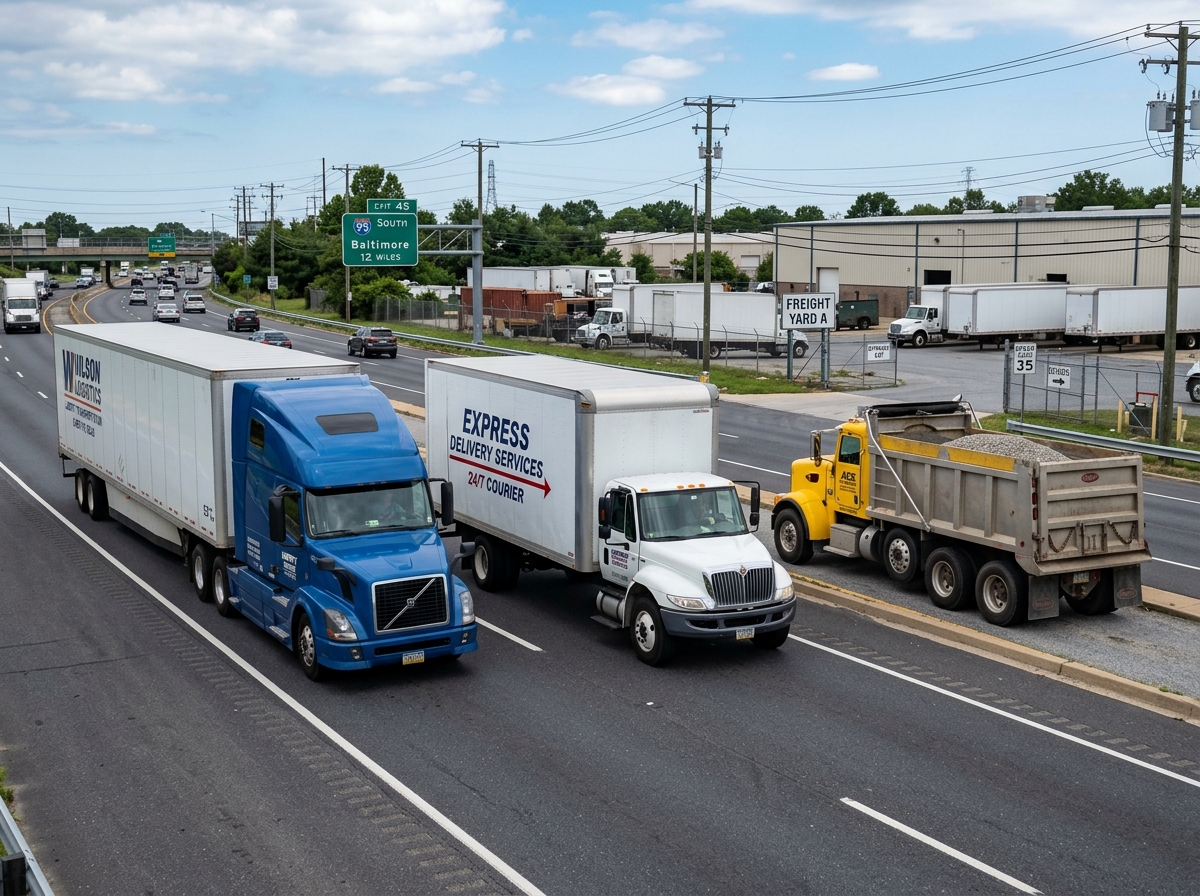
From the local delivery driver in a box truck to the long-haul driver in a sleeper cab, the right policy ensures that the specific risks of your route and cargo are accounted for. For more details on how we can help your specific niche, check out more info about commercial trucking services.
Why Standard Auto Policies Are Insufficient
We often get asked, “Can’t I just use a regular commercial auto policy?” The short answer is: usually not for heavy trucks. Standard policies often have weight limits (often capping at 10,000 or 20,000 lbs) and strict exclusions for business use that involves hauling for-hire.
Furthermore, standard policies don’t account for:
- Cargo Value: A regular policy won’t pay for the $200,000 worth of electronics in your trailer if they are stolen.
- Regulatory Filings: Personal or light-commercial policies don’t provide the federal MCS-90 endorsement required for interstate travel.
- Higher Liability Limits: Most standard policies cap out at $300,000 or $500,000, which won’t satisfy the FMCSA’s $750,000+ requirement.
Essential Coverage Types for Trucking Businesses
Building a solid insurance “wall” around your business requires more than just one type of coverage. Think of it like a puzzle; if one piece is missing, your whole business is exposed.
According to scientific research on large truck accident rates and risks, while truck drivers often have lower accident rates per mile than passenger vehicles, the severity of those accidents is much higher due to the sheer mass of the truck. This makes the following coverages essential:
- Motor Truck Cargo: This covers the “stuff” you’re hauling. If the freight is damaged by fire, collision, or even theft, this pays the owner of the goods.
- Physical Damage: This is for your truck. It includes Collision (hitting another object) and Comprehensive (theft, vandalism, fire, or hitting a deer).
- Trailer Interchange: If you are pulling a trailer you don’t own as part of a swap agreement, this covers damage to that specific trailer.
- Non-Trucking Liability (NTL): This covers you when you are using the truck for personal reasons—like driving to the grocery store or a movie—while not under dispatch.
Primary Liability vs. General Liability in Commercial Auto Truck Insurance
This is one of the most common areas of confusion for new truckers.
Primary Liability is for when the truck is “rubber on the road.” It covers bodily injury and property damage to third parties if you cause an accident while driving. This is the coverage mandated by federal law.
General Liability (GL), on the other hand, covers your business operations off the road. Imagine a customer slips and falls at your office, or you accidentally damage a client’s loading dock while walking around (not while driving). GL provides that extra layer of slip-and-fall protection that Primary Liability does not.
Specialized Add-ons for Comprehensive Protection
To truly sleep well at night, many of our clients opt for specialized endorsements. For example, if your truck is in the shop for two weeks after an accident, how will you pay your bills? Rental Reimbursement with Downtime coverage can help replace that lost income.
If you haul perishables, Refrigeration Breakdown is a must-have; it covers cargo loss if your reefer unit fails. We even see “Pet Injury” coverage becoming popular for drivers who take their furry co-pilots on the road! Regardless of what you haul, keeping your freight safe is a priority—see these tips for motor truck cargo security for best practices.
Navigating Federal and State Compliance Requirements
The trucking industry is one of the most regulated in the country. If you’re crossing state lines, you fall under the jurisdiction of the Federal Motor Carrier Safety Administration (FMCSA).
The FMCSA mandates a minimum of $750,000 in primary liability for most trucks over 10,000 lbs. However, if you are hauling hazardous materials, that requirement jumps to $5 million.
State laws can also vary. For instance, California law and state-specific filing requirements are notoriously strict. In California, trucks under 10,001 lbs hauling household goods need at least $300,000 in liability, while heavier trucks must align with federal limits.
How Insurance Filings Work for Truckers
A “filing” is essentially a formal notification sent by us (your insurance provider) to the state or federal government confirming that you have the required insurance. It’s the “proof” that allows you to maintain your active authority.
Common filings include:
- BMC-91X: For interstate authority (federal).
- Form E: For intrastate authority (state-level).
- MCS-90: An endorsement that ensures the public is protected even if an accident isn’t technically “covered” by the policy terms.
At Pro Guard Insurance Agency, we understand that time is money. We typically aim for a 24 to 48-hour turnaround on filings to ensure your authority is activated as quickly as possible.
Factors Influencing Commercial Auto Truck Insurance Costs
We know the big question on everyone’s mind: “How much is this going to cost me?” In 2024, national averages for for-hire truckers ranged from roughly $746 to $954 per month, but your actual rate depends on several moving parts.
| Factor | Impact on Premium |
|---|---|
| Operating Radius | Local drivers usually pay less than long-haul (OTR) drivers. |
| Driving History | Clean CDL records are the #1 way to keep costs down. |
| USDOT Compliance | High CSA scores or safety violations will spike your rates. |
| Cargo Type | Hauling hazardous materials or high-end autos costs more than dry van freight. |
| Vehicle Age | Newer trucks have higher “Physical Damage” costs but may have better safety discounts. |
| Deductibles | Choosing a $2,500 deductible instead of $1,000 can lower your monthly bill. |
Strategies to Lower Your Commercial Auto Truck Insurance Premiums
You aren’t powerless when it comes to your premiums. One of the most effective ways to save is through Telematics. By sharing your driving data (speed, braking, etc.) via devices like ELDs, you can often earn significant discounts. Some programs offer new customers an average savings of 6% just for signing up.
Other ways to save include:
- Paying in Full: Many carriers offer a discount if you pay the annual premium upfront.
- Experience Matters: Having a CDL for more than two years often unlocks lower rate tiers.
- Safety First: Implementing a formal safety program and following expert guidance on preventing motor vehicle collisions can prevent the claims that cause rates to skyrocket.
Managing Risk Through Safety Initiatives
Insurance companies love “boring” drivers. The more you can prove that your operation is safe and predictable, the less you will pay. Integrating your Electronic Logging Device (ELD) data with your insurance provider is a great start, but it goes beyond that.
Route optimization helps avoid dangerous areas or high-traffic times, and strict maintenance logs ensure that a blown tire or brake failure doesn’t lead to a multi-million dollar claim. Perhaps most importantly, you must manage “the human element.” Fatigue is a leading cause of accidents; check out these research-backed tips for managing driver fatigue to keep your drivers alert and safe.
Frequently Asked Questions about Trucking Insurance
Does commercial truck insurance cover personal use?
This is a tricky one. Standard primary liability usually only covers you while you are “under dispatch”—meaning you are working. If you take the tractor to go pick up dinner on a Friday night, you are likely not covered by your business policy.
To fix this, you need Non-Trucking Liability (NTL). This is specifically designed for owner-operators under a permanent lease with a motor carrier. It provides liability coverage for those “non-economic” trips.
How quickly can I get insurance coverage and filings?
You shouldn’t have to wait weeks. With Pro Guard Insurance Agency, you can often get a quote and start the process within minutes. Once you’ve selected a policy, filings are typically completed within 24 to 48 hours. We know that if your trucks aren’t moving, you aren’t making money, so we prioritize speed without sacrificing accuracy.
What is the difference between bobtail and non-trucking liability?
These two are often confused, but they serve different purposes:
- Bobtail Insurance: Covers the tractor when it is being driven without a trailer, regardless of whether you are dispatched or not. It’s about the configuration of the truck.
- Non-Trucking Liability: Covers the truck (with or without a trailer) as long as it is being used for personal, non-business reasons.
If you’re unsure which one you need, we can look at your lease agreement and help you decide.
Conclusion
Navigating commercial auto truck insurance can feel like driving through a thick fog, but you don’t have to do it alone. At Pro Guard Insurance Agency, Inc., we’ve been helping truckers find their way since 2017.
As an independent brokerage, we aren’t tied to just one insurance company. We partner with over 100 carriers, which allows us to shop around and find the best rates and coverage for your unique business. Whether you are a local dump truck operator in Illinois or a long-haul carrier running through Texas and Florida, we are licensed in 31 states and ready to serve you with a personal touch.
Don’t leave your livelihood to chance. Let us help you build a policy that protects your trucks, your cargo, and your future.
Ready to get started? Request a Quote for Commercial Truck Insurance today and let’s get your business the protection it deserves.